How Do You Turn a Flower Into a Liqueur?
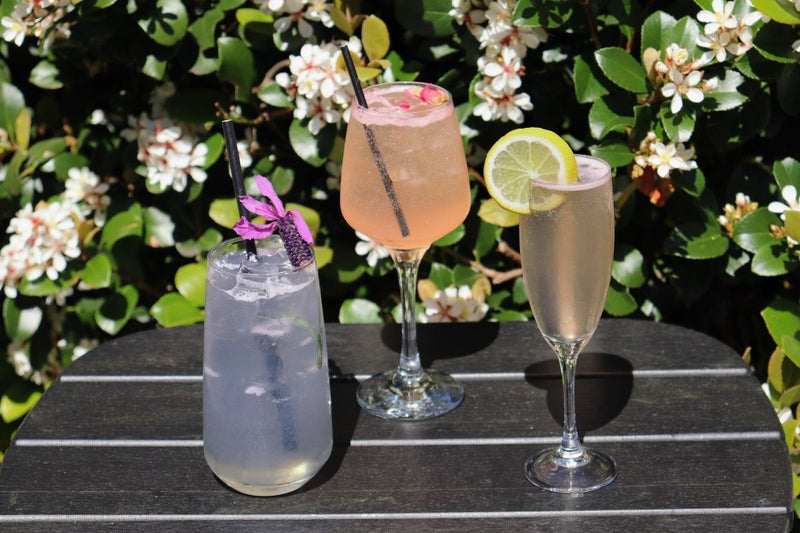
Inside Our Hibiscus, Violetta & Lavender Liqueurs
Hibiscus. Violetta. Lavender.
Three flowers most of us recognise by sight or scent. But translating those familiar botanicals into something you can actually drink requires very different techniques.
At Tamborine Mountain Distillery, we don't treat every floral botanical in the same way.
Hibiscus begins with a warm extraction before a long steep. Violetta is steeped directly in alcohol. Lavender takes another path altogether, travelling through our specialised Essential Oil Still.
Why?
Because making a floral liqueur isn't simply about extracting flavour. Aroma and colour matter too, and every botanical gives them up differently.
That's where the distiller's job begins.

How Do You Extract Flavour from a Flower?
The key is understanding what you want to capture from the botanical — and how best to capture it.
Steeping allows flavour, aroma and colour to gradually move from a botanical into a liquid.
Distillation works differently. Steam carries volatile aromatic compounds from the plant material before cooling back into liquid, allowing us to capture some of its most fragrant elements.
Neither technique is automatically better.
It depends on the botanical.
Rather than asking every flower to fit the same process, we change the process to suit the flower.
Hibiscus Liqueur: Heat, Colour & Patience
Hibiscus certainly isn't shy.
Its deep red colour is one of the first things you notice, and capturing that colour alongside its delicate flavour and aroma is an important part of making our Hibiscus Liqueur.
We begin by gently heating the hibiscus flowers in water, where they're held and slowly mixed for approximately six hours.
Think of it a little like making tea — only on a distillery scale.
From there, the hibiscus extraction is combined with alcohol and left to steep.
And this is where patience takes over.
The steep can continue for up to six months, giving the hibiscus time to impart its colour, aroma and botanical character into the liquid.
There's no trip through the still.
Just heat, alcohol and time — each doing a different part of the job.

How Do You Drink Hibiscus Liqueur?
Hibiscus Liqueur can be enjoyed chilled or over ice, but its vivid colour and botanical character make it particularly interesting in cocktails.
Try it with sparkling wine or soda for a simple long drink, or use a small amount to introduce floral character and colour to a cocktail.
Violetta Liqueur: Letting Alcohol Do the Work
Violetta follows a different path.
There's something almost old-world about its aroma — distinctive, perfumed and immediately recognisable once you know it.
Unlike Hibiscus, there's no initial hot-water extraction.
Instead, the botanical is steeped directly in high-strength alcohol. Over time, the alcohol draws out the aromatic character we're looking for.
No steam distillation.
No six-hour warm extraction.
Just a more direct relationship between the botanical, alcohol, and time.
It sounds simple on paper.
The result is anything but ordinary.

What Does Violet Liqueur Taste Like?
This is probably the floral liqueur people have the most difficulty imagining before tasting it.
And that's understandable.
Most of us know what an orange, raspberry or lemon tastes like. Far fewer people have a reference point for drinking violetta.
It has a distinctly floral and aromatic character, which makes it particularly interesting in cocktails where aroma can be just as important as flavour.
It's also a good example of why we encourage visitors to taste unfamiliar flavours at the distillery.
Sometimes the bottle you'd never think to choose is the one you remember most.
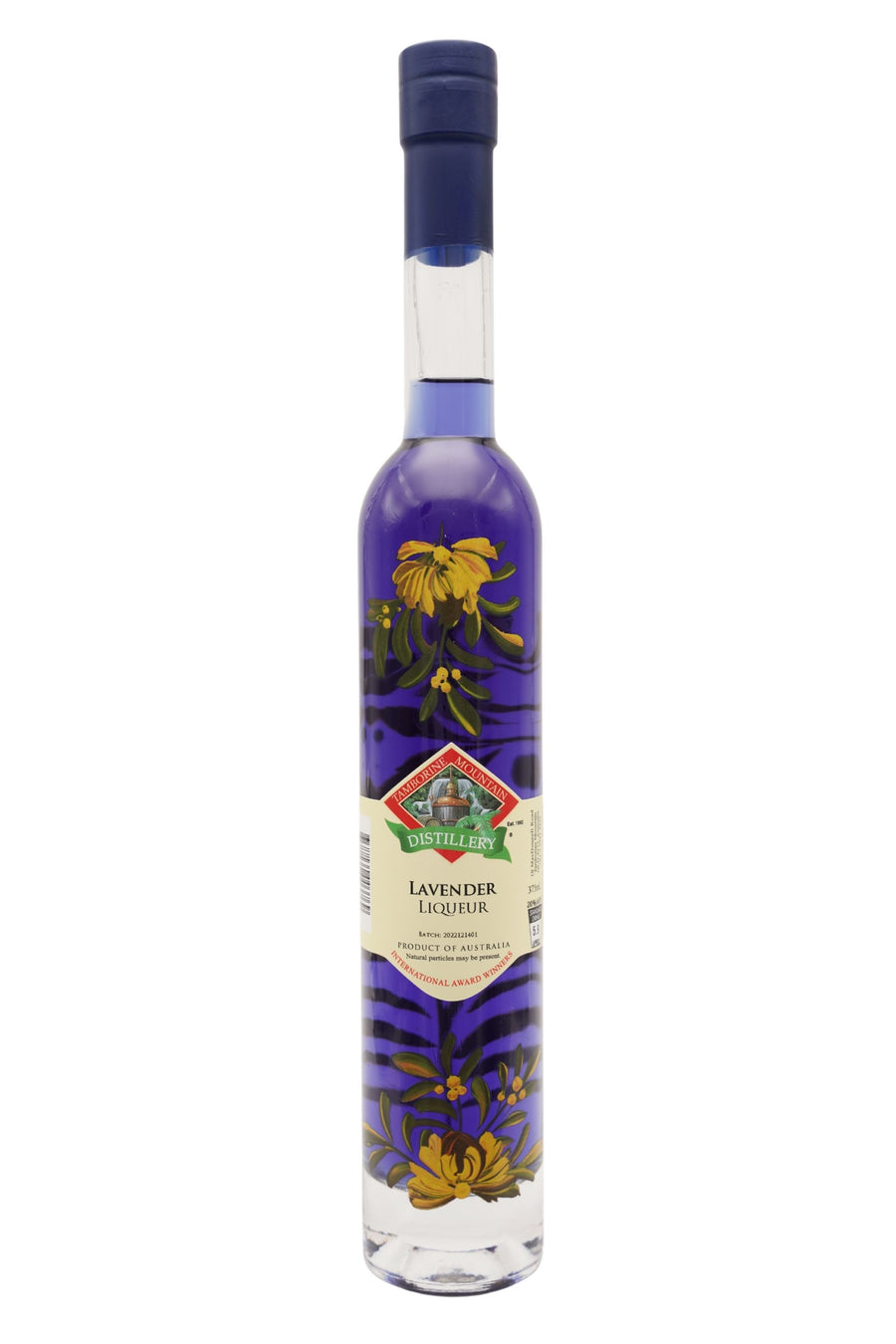
Lavender Liqueur: A Journey Through the Essential Oil Still
Then there's Lavender.
This one doesn't steep in alcohol at all.
Instead, chopped Lavender stems go into our specialised Essential Oil Still, where steam slowly passes through the plant material.
As the steam moves through the Lavender, it carries aromatic compounds from the plant with it.
That fragrant vapour then travels through the condenser, where it cools back into liquid.
From that distillation, we collect two things: Lavender essential oil and Lavender hydrosol, sometimes called Lavender water.
Both are used in creating our Lavender Liqueur.

It's one of the more fascinating transformations to see because the starting aroma is so familiar.
You know Lavender before you've tasted it.
Then suddenly, you're experiencing that familiar botanical through a glass rather than a garden.
What Is Lavender Hydrosol?
Hydrosol is the aromatic water produced during the steam distillation of botanicals.
When we distil Lavender, the process gives us both essential oil and hydrosol.
The essential oil is highly concentrated and intensely aromatic. The hydrosol is the fragrant water produced alongside it, carrying a softer expression of the Lavender.
Our Essential Oil Still allows us to collect both separately before we use them in creating the liqueur.
It's also a useful reminder that a still isn't only used to make alcohol.
Sometimes we're using one to capture the aroma of a plant.
Do Floral Liqueurs Actually Taste Like Flowers?
That's the question we hear most often.
The interesting thing about drinking a floral liqueur is the connection between aroma and flavour.
Your nose might recognise something familiar — perhaps Lavender from a garden or Violetta from perfume — but experiencing that aroma as part of a drink can feel completely different.
And cocktails add another dimension.
A floral liqueur doesn't necessarily need to dominate the glass. Alongside citrus, sparkling wine, gin or other ingredients, it can contribute aroma, colour and a botanical note that changes the whole drink.
It's one of those flavours that's much easier to understand from a glass than from a description.

Taste Them Side by Side
If you've never tried a floral liqueur, choosing one from a description isn't always easy.
So don't.
When you visit Tamborine Mountain Distillery, try the florals alongside one another.
Start with Hibiscus and its vivid colour.
Move to the distinctive aroma of Violetta.
Then discover what happens when the familiar fragrance of Lavender reaches the glass.
Three botanicals. Three different journeys. Three very different expressions of what “floral” can mean.
You might arrive thinking floral liqueurs aren't for you.
One of them may surprise you.
And that's exactly why they're worth tasting.
► PLAN YOUR TASTING AT TAMBORINE MOUNTAIN DISTILLERY
Frequently Asked Questions
How do you make a floral liqueur?
There isn't one method that works for every botanical.
At Tamborine Mountain Distillery, Hibiscus begins with a warm-water extraction followed by a long steep. Violetta is steeped directly in alcohol, while Lavender is steam distilled in our Essential Oil Still.
The process changes depending on what we want to capture from each botanical.
Can flowers be steeped in alcohol?
Yes. Alcohol can extract flavour, aroma, colour and other characteristics from botanicals.
We use direct alcohol steeping for Violetta, while Hibiscus goes through a warm-water extraction before its longer steeping stage.
What is the difference between steeping and distilling botanicals?
Steeping allows characteristics from a botanical to gradually infuse into a liquid.
Steam distillation works differently. Steam passes through the botanical and carries volatile aromatic compounds with it. The vapour is then condensed back into liquid so those aromatic elements can be collected.
Which approach we use depends on the botanical.
What is Lavender hydrosol?
Lavender hydrosol, sometimes called Lavender water, is the aromatic water produced during steam distillation. When we distil Lavender, we collect both essential oil and hydrosol, and use both in creating our Lavender Liqueur.
Does Tamborine Mountain Distillery distil Lavender?
Yes. We distil Lavender in our specialised Essential Oil Still, where steam passes through the plant material and allows us to collect Lavender essential oil and hydrosol.
Both are then used in creating our Lavender Liqueur.