When the Bunya Tree Decides It’s Time
From a Rare Bunya Nut Harvest to a Limited Tamborine Mountain Liqueur
There are moments in distilling when you feel less like you're in charge and more like you're simply responding to nature's schedule.
This bunya season on Tamborine Mountain has been one of those moments.
On the western side of the Tamborine Mountain Distillery car park stand three enormous bunya pines. Most of the time, they quietly tower over the distillery.
Then bunya season arrives.
The enormous cones begin dropping with a thud, branches underneath take a beating and the ground suddenly becomes somewhere you approach with considerable respect.
Collecting fruit becomes a job requiring a construction helmet rather than a basket.
It's not every harvest that involves head protection.

A Rare Bunya Harvest on Tamborine Mountain
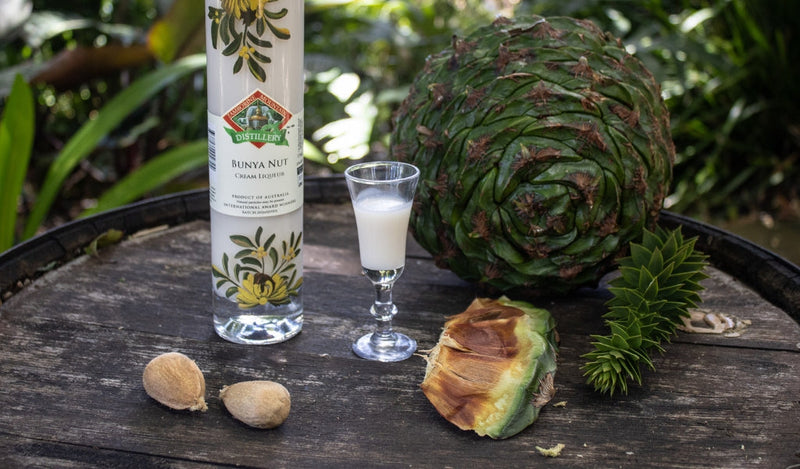
Bunya nuts come from the bunya pine (Araucaria bidwillii), a remarkable Australian native conifer naturally associated with parts of Queensland and northern New South Wales.
Bunya pines can live for hundreds of years and are known for producing enormous cones containing edible nuts.
Heavy crops don't arrive every year, which makes a particularly productive bunya season impossible to ignore.
And this one certainly got our attention.
Across the three bunya trees at Tamborine Mountain Distillery, nearly 200 large cones dropped during the season, making it our biggest bunya harvest in more than a decade.
Individual cones can be enormous. Ours ranged from around five to nine kilograms, with each containing dozens of chestnut-sized nuts.
When they fall, they fall hard.
It's an impressive reminder that this particular harvest happens entirely on the trees' terms.

The Bunya Tree's Deep Cultural Significance
Long before bunya nuts became an ingredient for our distillery, the bunya tree held profound cultural significance for Aboriginal peoples.
Large bunya gatherings brought First Nations groups together, with people travelling considerable distances during productive seasons. These gatherings were connected with food and ceremony as well as social, cultural and community relationships.
The bunya is therefore much more than an unusual native ingredient.
Its story is deeply connected to people, place and gathering.
That history deserves respect, particularly when working with an ingredient that has such a strong connection to the region we call home.

Turning Our Bunya Nut Harvest into a Liqueur
This season gave us an opportunity we'd never had before.
For the first time at Tamborine Mountain Distillery, our own bunya nut harvest was going into a liqueur.
But we didn't simply want to add bunya flavour to an existing cream base.
We wanted the nuts themselves to become part of its foundation.
So we started experimenting.

Making Milk from Bunya Nuts
Rather than using dairy milk, we developed a plant-based milk from the bunya nuts themselves.
Bunya nuts have a naturally rich texture and gently nutty character. Processing them into a milk allowed us to explore that creaminess while keeping the bunya at the centre of the drink.
The result became the foundation for our Bunya Nut Cream Liqueur — our first cream-style liqueur created using a non-dairy milk base.
It's a slow, hands-on process and began very much as an experiment.
But that's part of what makes seasonal distilling interesting.
Sometimes the ingredient arrives first and you have to work out what it wants to become.

What Does Bunya Nut Cream Liqueur Taste Like?
During development, we shared early trials of the Bunya Nut Cream Liqueur with customers at the distillery.
The response told us we were onto something.
Think smooth, creamy and gently nutty, with the comforting character you might associate with a classic cream liqueur, but built around a distinctly local Australian ingredient.
The bunya provides more than flavour. Its texture is an important part of the experience, giving the liqueur richness without relying on traditional dairy milk.
It's familiar enough to feel comforting and unusual enough to make you wonder where bunya nuts have been hiding all this time.
A Community Bunya Harvest
There was another part of the project that felt particularly appropriate.
We decided to make it a community batch.
During the harvest, locals with productive bunya trees and more nuts than they could use were invited to contribute them to the distillery.
Those nuts joined ours in the shared batch, turning what began beneath three trees at the distillery into something involving the wider Tamborine Mountain community.
It felt right.
Bunya season has long been associated with gathering and sharing, and while our little distillery project exists in a very different context, creating something collectively gave this particular batch additional meaning.

From Tree to Bottle
There is something unusual about creating a spirit or liqueur from an ingredient growing only metres from where it will eventually be bottled.
The cones fall.
The nuts are collected and prepared.
The bunya milk is made.
The recipe takes shape.
And eventually, a fleeting harvest becomes something you can pour into a glass.
That's what makes truly seasonal releases interesting. They don't begin with a marketing calendar.
They begin when nature decides it's time.
Capturing a Season in a Bottle
Eventually the cones stop falling.
The ground clears, the helmets can be put away, and our three bunya trees return to their usual stillness.
Until they decide otherwise.
Our Bunya Nut Cream Liqueur captures one remarkable harvest from the trees here at Tamborine Mountain Distillery, together with bunya nuts contributed by members of our local community.
It's a drink shaped by experimentation, seasonality and a very distinctive Australian ingredient.
And there may never be another batch quite like it.
► DISCOVER OUR BUNYA CREAM LIQUEURS
Frequently Asked Questions
What are bunya nuts?
Bunya nuts are the edible seeds produced by the bunya pine (Araucaria bidwillii), an Australian native conifer. The nuts grow inside very large cones and have long been an important food with deep cultural significance for Aboriginal peoples.
Where do bunya trees grow?
Bunya pines are native to parts of Queensland, with their natural distribution particularly associated with south-east and central Queensland, as well as a smaller occurrence in northern New South Wales. They are also cultivated in other areas.
What do bunya nuts taste like?
Bunya nuts have a mild, nutty flavour and a starchy, substantial texture. Their relatively subtle character makes them suitable for both savoury and sweet preparations.
Can you make milk from bunya nuts?
Yes. Bunya nuts can be processed with water to create a plant-based liquid. At Tamborine Mountain Distillery, we developed bunya nut milk as the base for our Bunya Nut Cream Liqueur, allowing the character and texture of the nut to play a central role in the finished drink.
What is Bunya Nut Cream Liqueur?
Tamborine Mountain Distillery's Bunya Nut Cream Liqueur is a seasonal cream-style liqueur made using milk created from bunya nuts. The original batch began with nuts harvested from bunya trees at the distillery and contributions from the local community.
Is Bunya Nut Cream Liqueur dairy-free?
The bunya milk used to create the liqueur is plant-based rather than dairy milk. For current allergen, ingredient and dietary information about a particular release, always refer to the product information provided with that batch.